
Goodbye to all that
Memorialising the death of Malaysia's Sumatran Rhinos


"Iman, on the other hand, was very moody when she first came in. She's often in a very bad mood. Can't blame her because of the tumour inside her reproductive tract.
“Took her almost 10 years to accept us, to trust us.
“Every time she is very, very ill, she lets us handle her, lets us give her injections, lets us put in intravenous fluids.
“When she is well, she is so happy, so playful, running, galloping and nudging the keepers. She takes all the time, even as she eats. I miss that very often,” writes Dr Zainal, the veterinarian at the Borneo Rhino Sanctuary.
“She” was a female Sumatran rhino, the last of the species in Malaysia, that had been suffering from cancer when she died at the sanctuary in the Tabin Wildlife Reserve in Lahad Datu, Sabah, at 5.35pm on Nov 23.
Read more: Iman dies after battle with cancer
To memorialise the extinction of the species in Malaysia, The Star asked Dr Zainal to describe the personalities of the three rhinos he took care of: Kretam, the male, and two females, Puntung and Iman.
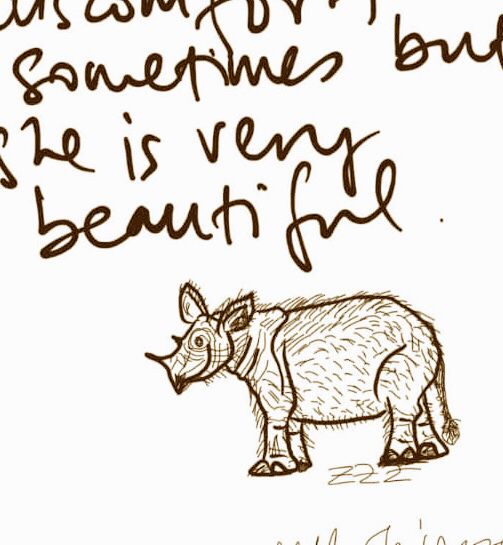
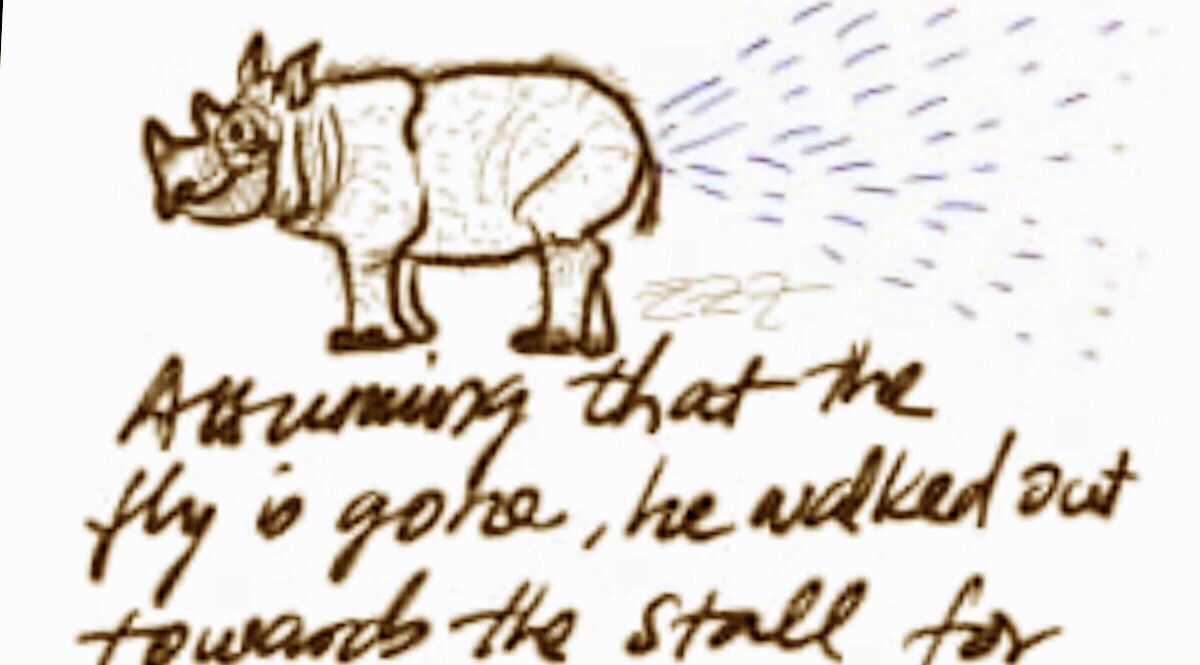
His reply, handwritten over several pages and then photographed and sent over WhatsApp, was accompanied by doodles of a crying face, a cheeky looking Kretam spraying urine, Puntung’s stump of a leg, and Iman with tufts of reddish brown hair.
"Iman, the most hairy of them all," Dr Zainal wrote, ending the notes with the words "My rhinos".
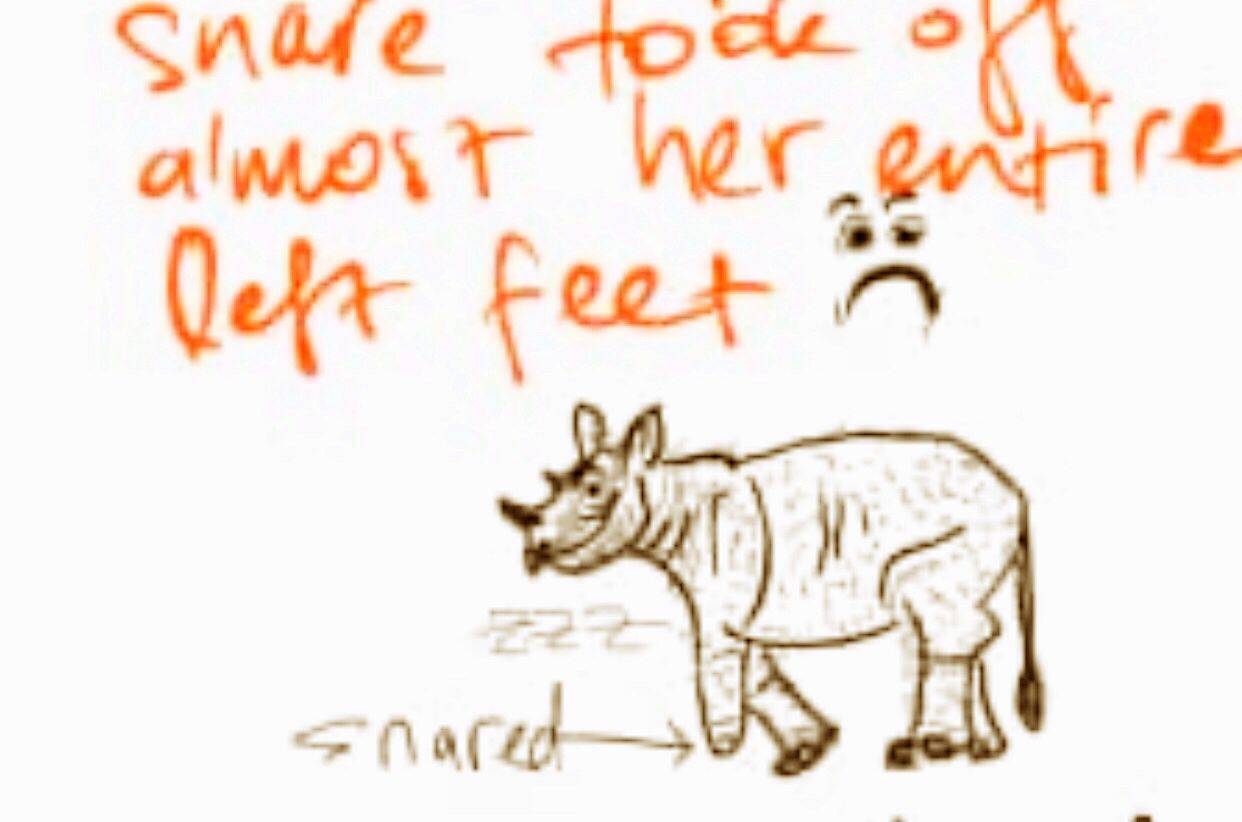


Iman, the most hairy of them all


"Iman, on the other hand, was very moody when she first came in. She's often in a very bad mood. Can't blame her because of the tumour inside her reproductive tract."
“Took her almost 10 years to accept us, to trust us.
“Every time she is very, very ill, she lets us handle her, lets us give her injections, lets us put in intravenous fluids.
“When she is well, she is so happy, so playful, running, galloping and nudging the keepers. She takes all the time, even as she eats. I miss that very often,” writes Dr Zainal, the veterinarian at the Borneo Rhino Sanctuary.
“She” was a female Sumatran rhino, the last of the species in Malaysia, that had been suffering from cancer when she died at the sanctuary in the Tabin Wildlife Reserve in Lahad Datu, Sabah, at 5.35pm on Nov 23.
Read more: Iman dies after battle with cancer
To memorialise the extinction of the species in Malaysia, The Star asked Dr Zainal to describe the personalities of the three rhinos he took care of: Kretam, the male, and two females, Puntung and Iman.
His reply, handwritten over several pages and then photographed and sent over WhatsApp, was accompanied by doodles of a crying face, a cheeky looking Kretam spraying urine, Puntung’s stump of a leg, and Iman with tufts of reddish brown hair.
"Iman, the most hairy of them all," Dr Zainal wrote, ending the notes with the poignant words "My rhinos".

Iman, the most hairy of them all


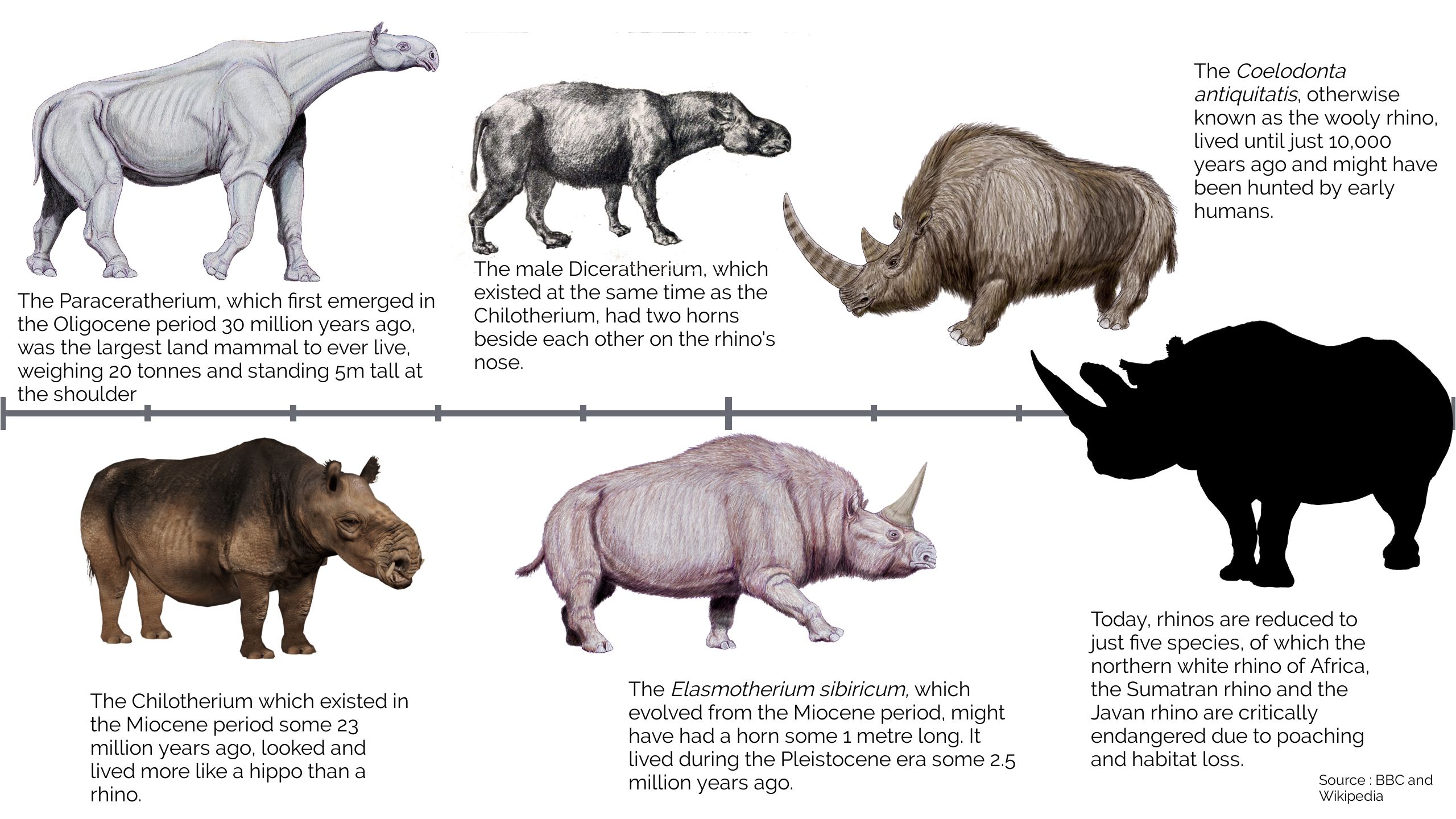
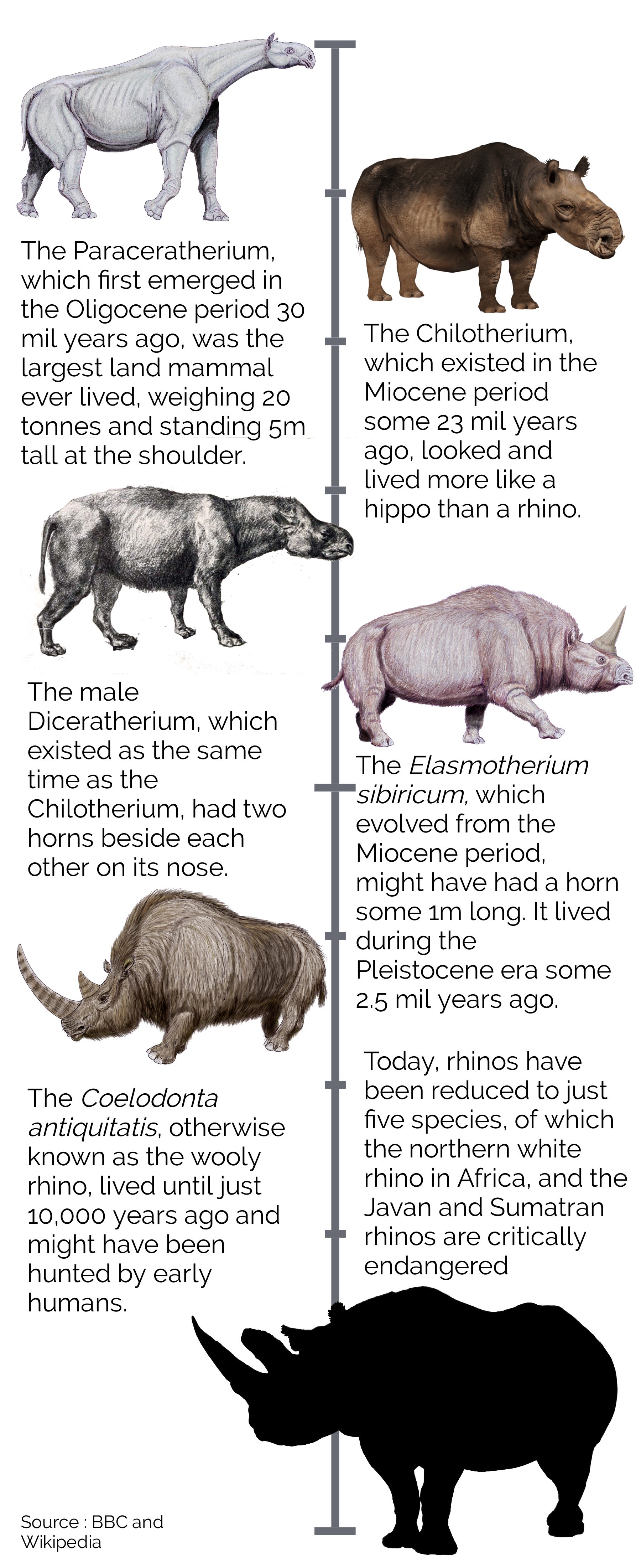
Timeline for the Evolution of Rhinos
Timeline for the Evolution of Rhinos
Also known as the hairy rhino, the singing rhino or the Asian two-horned rhino, Dicerorhinus sumatrensis is the world’s smallest rhinoceros and believed to be the most closely related to the extinct wooly rhino that first emerged some 10,000 years ago.
Listen to The Singing Rhino
Iman’s passing closes the chapter on attempts by local wildlife authorities to conserve the species that began as early as the 1960s: the Selangor government gazetted the Sungai Dusun Wildlife Reserve back in 1964 primarily to protect Sumatran rhinos, and as late as 2010, there were six rhinos living there. Now the animals can only be found in a few places in Indonesia and number roughly between 50 and 80 individuals.

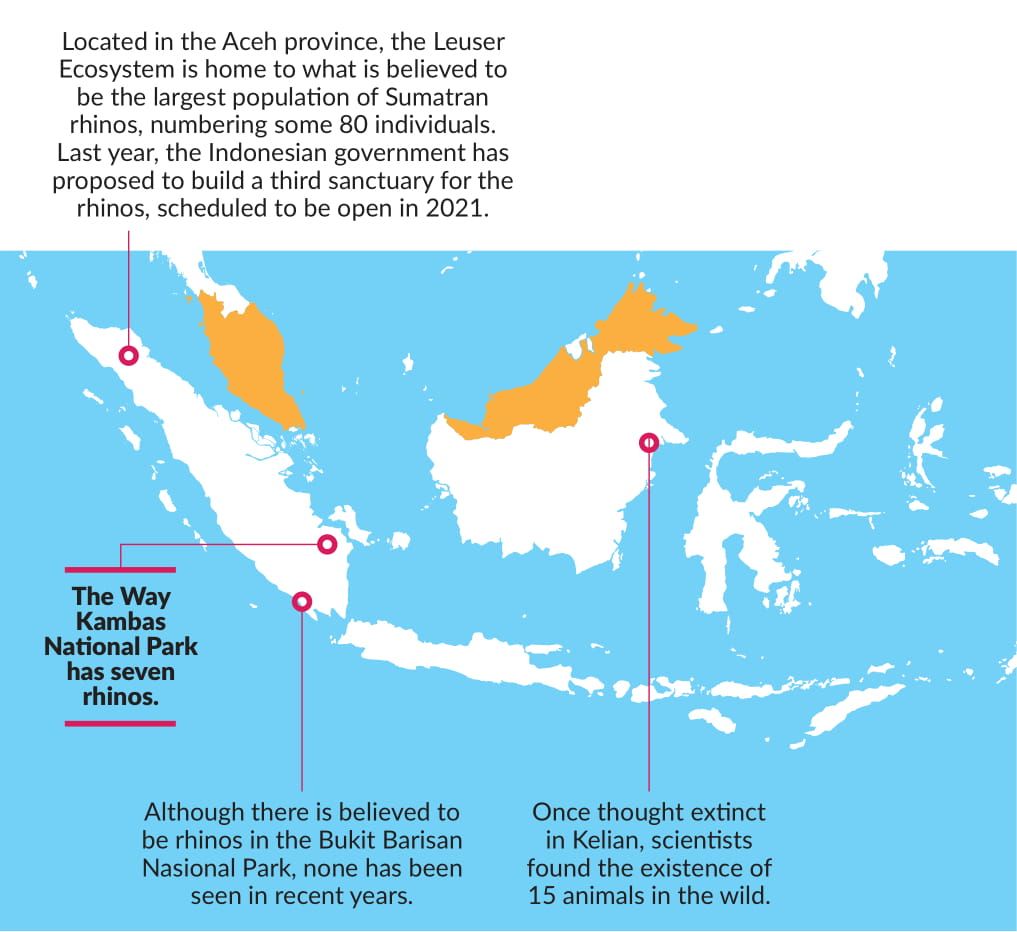
Source: WWF and Wikipedia
Source: WWF and Wikipedia
Read: Our Fatal Blunders
It is a sad end to a species whose evolution spanned 50 million years and that once roamed as far as Bhutan and India, possibly even up to Sichuan in China.
Iman’s death also means that the Sumatran rhino is extinct – in the wild and in captivity, anywhere and everywhere – in Malaysia. We have irrevocably lost a part of our wildlife heritage, leaving a DNA vacuum in our ecosystem that can never be filled.
It is also a grave indictment of our efforts to protect and conserve wildlife, as this is not the first time that Malaysia has lost a species, it's just the most recent to disappear.
Malaysia has also lost, notably, the Javan rhino, hunted to extinction in the 1930s; the green peafowl, extinct in the wild since the 1960s; and the leatherback turtle, which no longer nests on our shores.

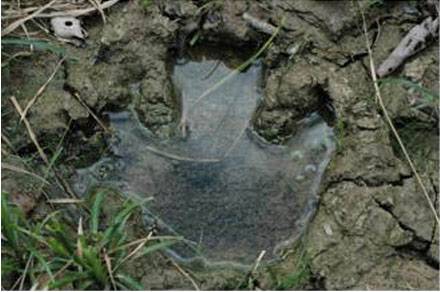
Missing from Malaysia's jungles: The footprint of a Sumatran rhino. — WWF Malaysia
Missing from Malaysia's jungles: The footprint of a Sumatran rhino. — WWF Malaysia

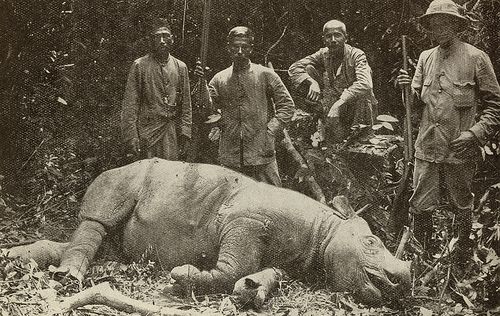
An undated picture of a Javan rhino hunted by a shooting party, believed to be somewhere in Peninsular Malaysia.
An undated picture of a Javan rhino hunted by a shooting party, believed to be somewhere in Peninsular Malaysia.

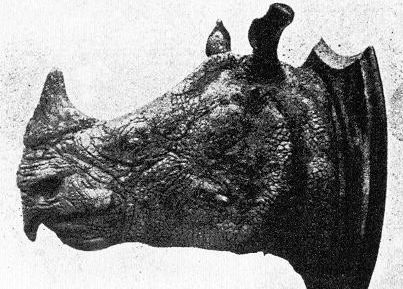
Undated photo of the head of a male Javan rhino shot in Perak, displayed in the Raffles Museum, now the National Museum of Singapore. The last Javan rhino was shot in 1932. — Wikipedia
Undated photo of the head of a male Javan rhino shot in Perak, displayed in the Raffles Museum, now the National Museum of Singapore. The last Javan rhino was shot in 1932. — Wikipedia

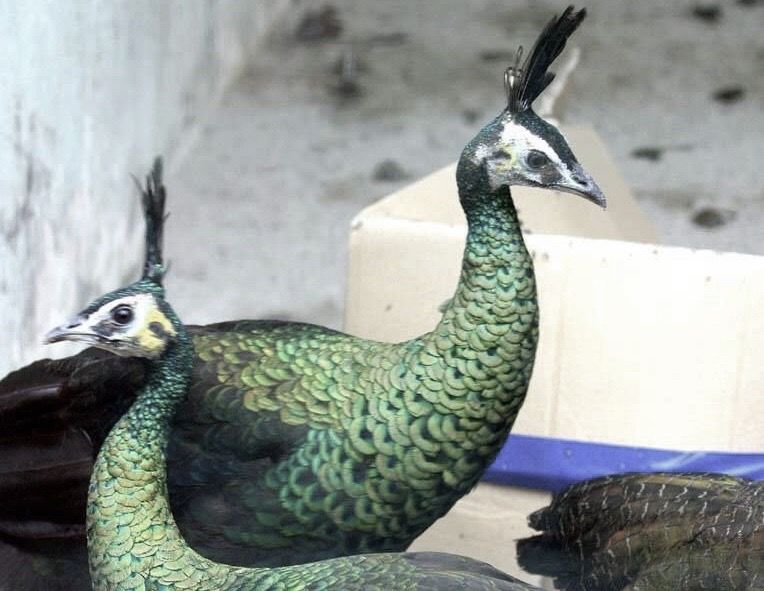
Green peafowl, known locally as merak hijau, in a photo taken in 2004 during an attempt to re-introduce the species in Malaysia. — Filepic
Green peafowl, known locally as merak hijau, in a photo taken in 2004 during an attempt to re-introduce the species in Malaysia. — Filepic

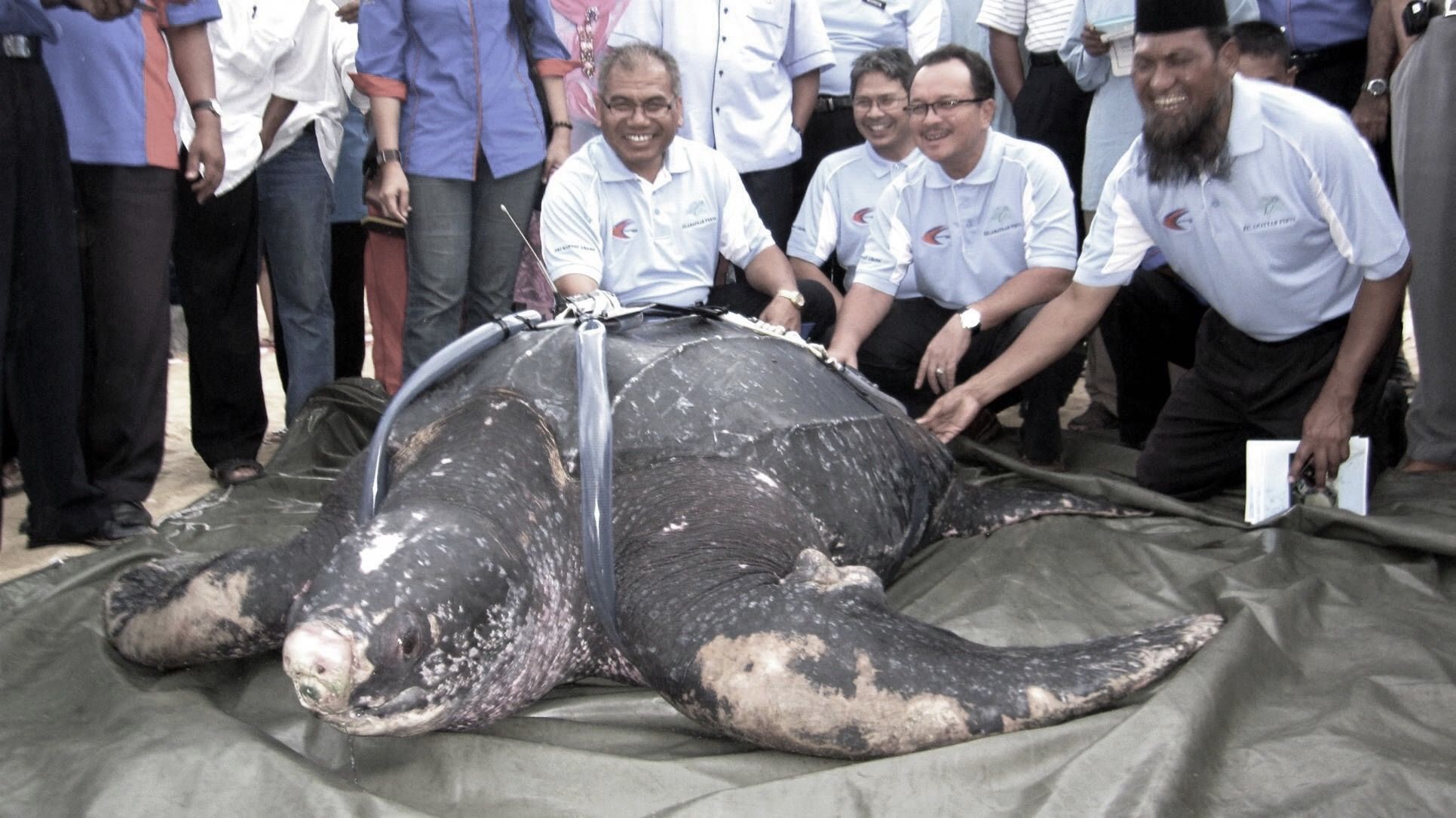
In this August 2010 photo, a 32-year-old female leatherback is about to be released from the Rantau Abang Turtle Sanctuary in Terengganu after a two-day quarantine. The turtles are no longer returning to Malaysian shores to lay their eggs so they are effectively extinct in Malaysia.
In this August 2010 photo, a 32-year-old female leatherback is about to be released from the Rantau Abang Turtle Sanctuary in Terengganu after a two-day quarantine. The turtles are no longer returning to Malaysian shores to lay their eggs so they are effectively extinct in Malaysia.
This list is far from conclusive but when it comes to the Sumatran rhinos, could Malaysia have done more?
Attempts were made by local authorities. Even as Iman’s life was being eaten away by the cancer, scientists managed to harvest a single egg from her, which they tried fertilising with Kretam’s sperm. However, the attempt failed, as the sperm is believed to have been of poor quality.
Read: Scientists harvest single egg cell from Iman – Malaysia's last Sumatran rhino
The Sabah government also tried to work out an agreement with Indonesia to supply eggs but nothing came of it. And ovaries harvested from Puntung, which was put down in 2017, did not contain any eggs. So, basically, there are no means of keeping alive the genetic line of Sumatran rhinos from Malaysia.
Read: No egg cells in harvested ovaries
According to a 2017 paper by international rhino expert Dr Terri Roth and her team, a genomic analysis of the species’ demographic history showed that Sumatran rhino numbers were significantly reduced by the end of the Pleistocene era some 11,700 years ago.
This means that the species has been on the brink of extinction for thousands of years.
“The species has not been abundant on this earth for a very long time but it is a survivor – at least, it has been until now,” writes Dr Roth in an e-mail reply to queries from The Star.
Dr Roth’s work in the United States at the Cincinnati Zoo’s Centre for Conservation and Research of Endangered Wildlife has produced a Sumatran rhino calf.
Read: Provide funds for rhino conservation too, M’sia told
Besides the issue of fragmented forest and habitat loss from booming human population, Malaysia, adds Dr Roth in her email, has not provided the level of protection needed to keep poachers from entering the jungles and killing the rhinos.
Rhino horns are poached for traditional Chinese medicine, where it is used to treat ailments ranging from fever to “devil possession”, or increasingly, as ornamental carving and status symbols.
Today’s big markets are China and Vietnam.
“This weakness is not unique to Malaysia," says Dr Roth.
“The same is occurring in numerous countries all over the world and is largely the result of increased demand for natural resources by the growing human population and greed,” she says.
Breeding Sumatran rhinos in a managed sanctuary, admits Dr Roth, will always be difficult although the science behind doing this successfully is now known.
“The species is socially complex and their behaviour difficult to understand,” she points out, adding that breeding this species will continue to be a challenge.
“I believe, and always have, that we should be working on a two-pronged approach that includes both managed breeding and the most rigid protection of still viable populations.
“Both are needed to save the Sumatran rhino,” she says.
Regardless, Dr Roth remains hopeful for the species’ survival: a breeding sanctuary in Sumatra, Indonesia, was recently expanded to hold more rhinos, and the country has undertaken a plan to enhance the protection of its wild populations while capturing some fertile animals to supplement the breeding programme.
“Although the outlook for the Sumatran rhinos does appear bleak, we should remember that the Javan rhino population has been below 100 individuals for several decades but the Indonesian government, with the support of a few NGOs, has succeeded in maintaining a viable population despite the low numbers,” she said.
NUMBERING 58 to 68 individuals, the Javan rhino (Rhinoceros sondaicus) exists in only one place – the Ujung Kulon National Park in Java, Indonesia, situated across a narrow strait from Anak Krakatua, formed from the remains of an eruption of Krakatua in 1883.
The species could have as well been pushed to the brink of extinction here – if not for Krakatua's violent eruption in 1883.
Records show that 165 villages and towns near Krakatua were destroyed. More than 36,000 people died and thousands were injured, mostly from the tsunamis. While humans never returned to Ujung Kulon in large numbers, the Javan rhinos have remained.
Today, the rhinos are threatened by the same volcanic activity that once ensured their survival.

“I hope I live to see the day when Sumatran rhinos are re-introduced into healthy, protected forests in Malaysia and elsewhere," says Dr Roth.

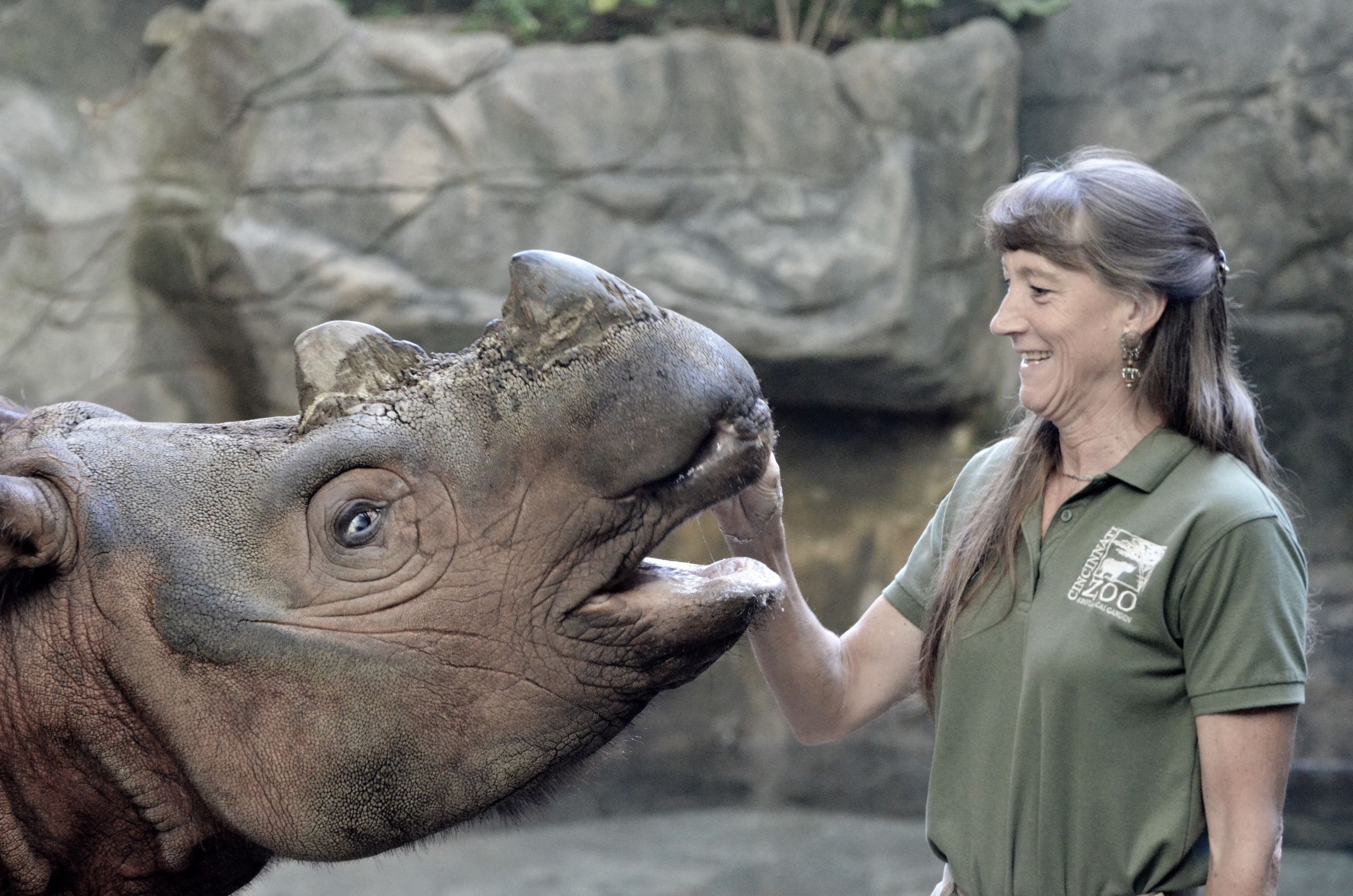
Dr Terri Roth with one of her charges at the Cincinnati Zoo. —Cincinnati Zoo
Dr Terri Roth with one of her charges at the Cincinnati Zoo. —Cincinnati Zoo
Until then, should this ever come to pass, it is hard not to take the loss of the Sumatran rhino personally. This is because the extinction of the species – which has evolved and survived for over 50 million years – isn’t just about an animal. It is, ultimately, about all of us.
“I hope I live to see the day when Sumatran rhinos are re-introduced into healthy, protected forests in Malaysia and elsewhere”.
Credits
Story by Sim Leoi Leoi
Graphics by Foo Chern Hwan
Photographs by the Borneo Rhino Alliance
Editing by Malini Dias
 Built with Shorthand